CPU holds 16th Research and Development Week

By Cyrus A. Natividad
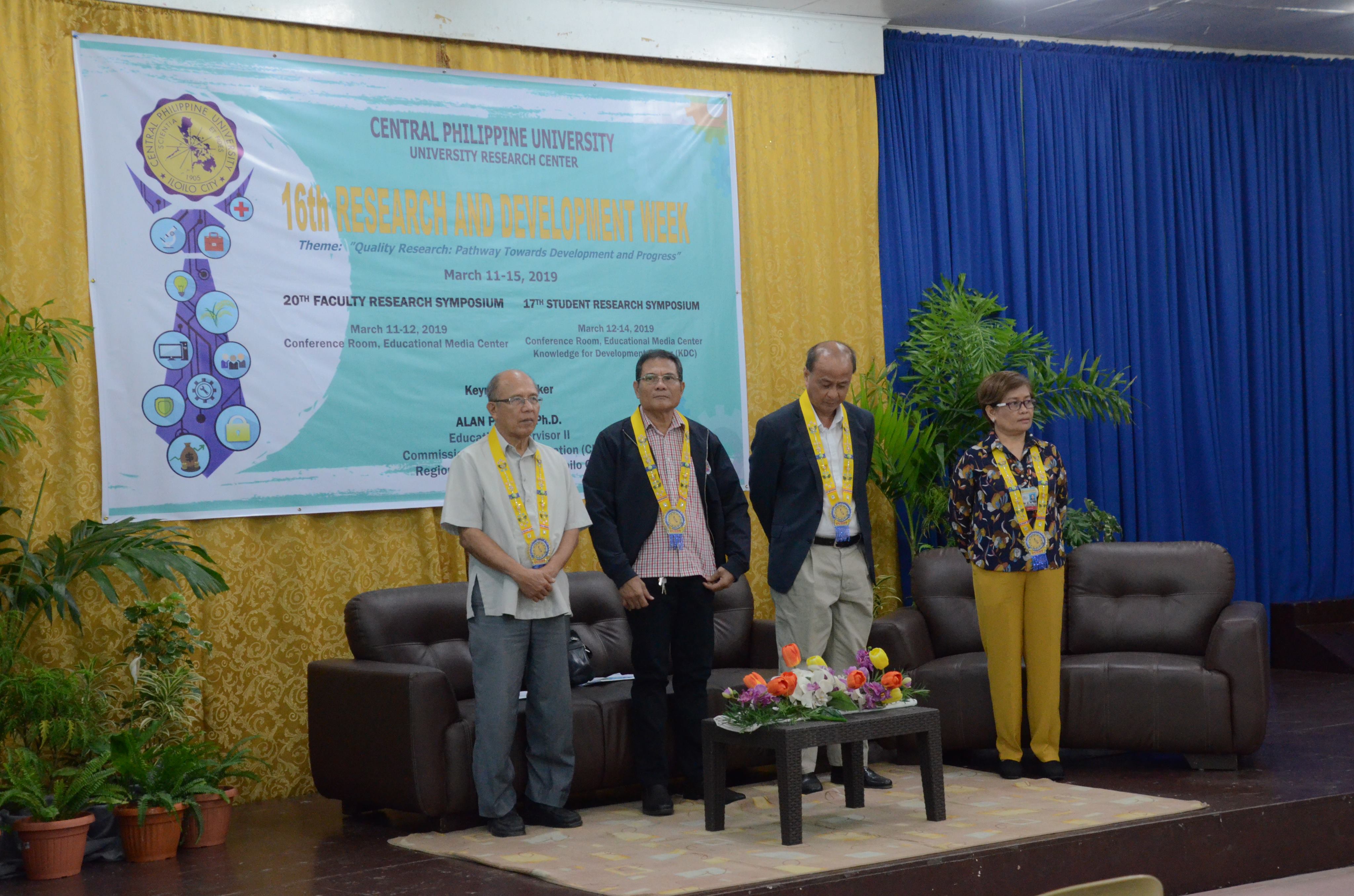
CPU President, Dr. Teodoro C. Robles together and Keynote Speaker, Dr. Alan P. Lena, Education Supervisor II, Commission on Higher Education (CHED) together with CPU Vice President for Academic Affairs, Dr. Irving Domingo L. Rio and University Research Center Director Dr. Mary O’ Penetrante.

The week-long research and development week started on Monday, March 11, 2019, at the CPU Educational Media Center Conference Room with faculty, students and administrators present. University Research Center Director Dr. Mary O’Penetrante and members of the URC Committee (URESCOM) launched the event with the theme “Quality Research: Pathway towards Development and Progress.” Research papers were presented throughout the week according to different categories: Agricultural Engineering, Business Research, Education, Environmental Management, Life Science, and Junior High School among others.

Vice President for Academic Affairs, Dr. Irving Domingo L. Rio, welcomed the participants and acknowledged that the Research and Development Week is important in honing the research skills of faculty and students. University President, Dr. Teodoro C. Robles, encouraged the participants to continue with research and sustain CPU as a research university. “The more we work together, the more we can accomplish things,” Dr. Robles said.
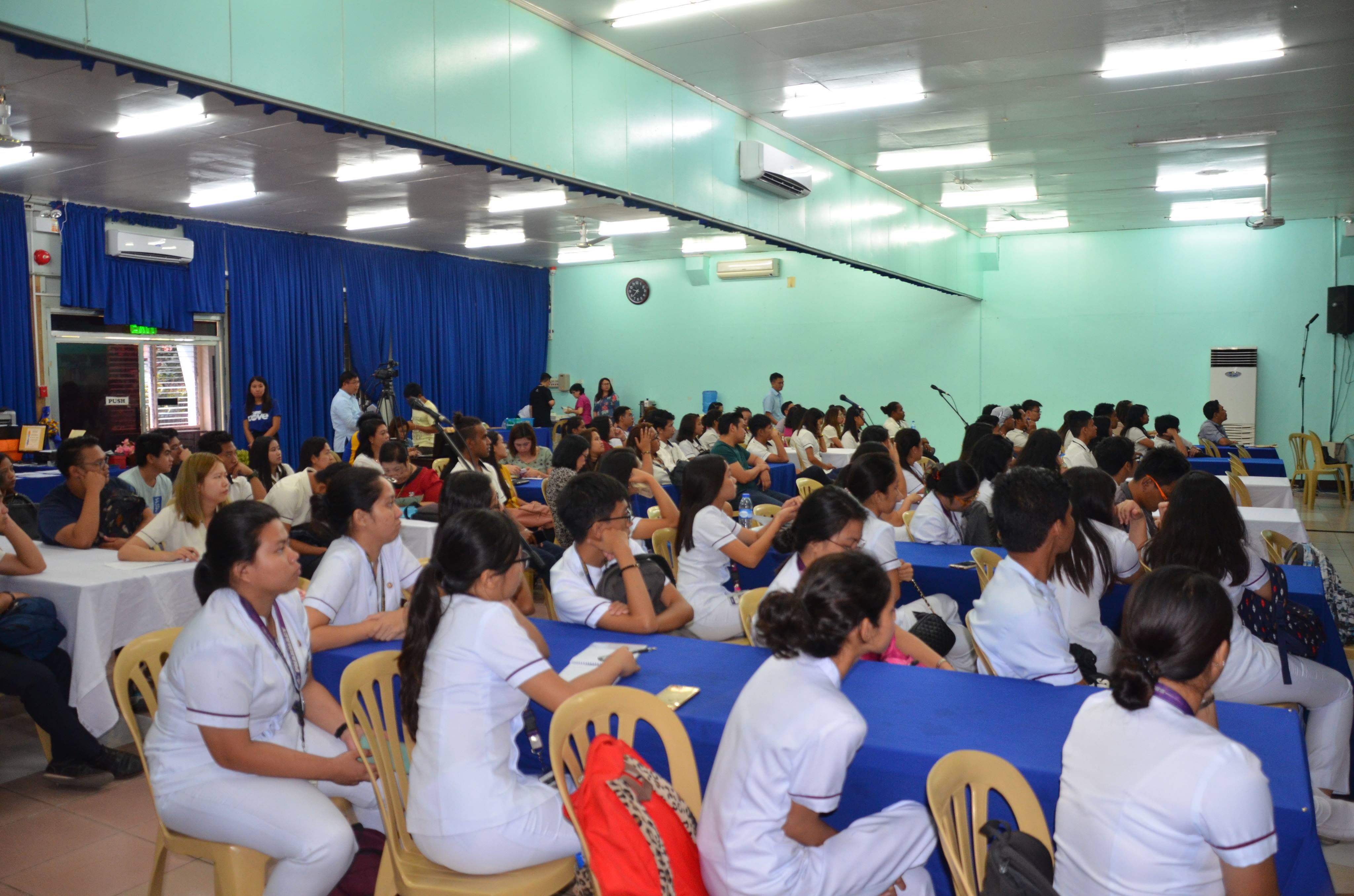
Participants of the Research and Development Week eagerly listening to the talk.

The keynote speaker, Dr. Alan P. Lena, Education Supervisor II, Commission on Higher Education (CHED), pointed out the need for universities to strengthen their research education. He particularly mentioned how challenging discovery-applied research is and said that this kind of research contributes to the advancement of higher educational institutions.

The 20th Faculty Research Symposium on March 11-12 and the 17th Student Research Symposium on March 12-14 are part of this year’s Research and Development Week.
RCECC holds seminar on Indigenous Cultural Engagement

By Cyrus A. Natividad

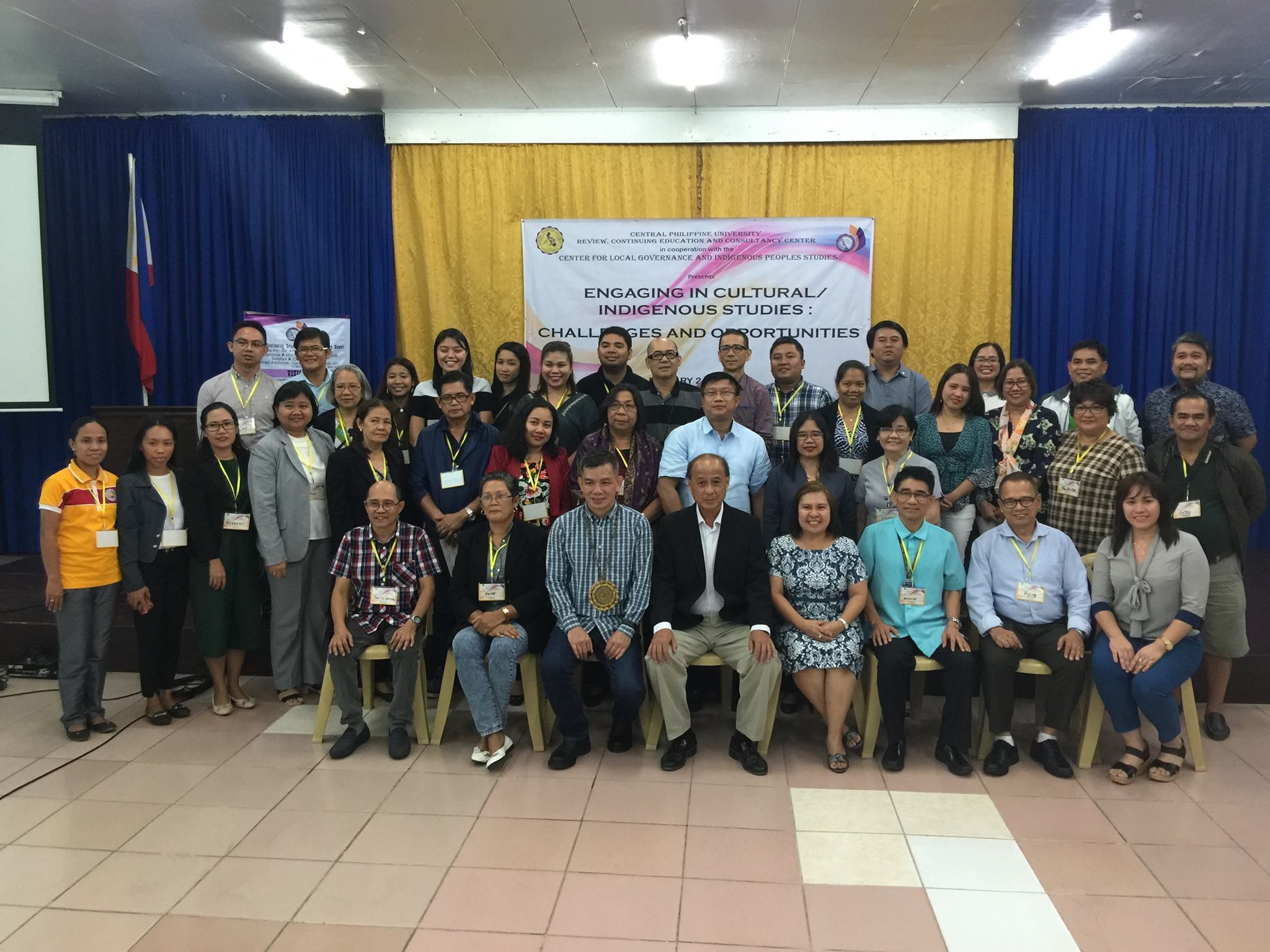
Dr. Lenny Rose P. Mucho, Director, CPU Review and Continuing Education and Consultancy Center, CPU Vice President for Academic Affairs, Dr. Irving Domingo L. Rio, Rev. Dr. Bernabe C. Pagara, Dean, CPU College of Theology with the speakers and participants. 

On January 24, 2019, the Review and Continuing Education and Consultancy Center (RCECC) of Central Philippine University held a seminar entitled “Engaging in Cultural/Indigenous Studies: Challenges and Opportunities.”

Jimmy Balud Fong from the University of the Philippines-Baguio conducted the ethnological seminar in view of the unfinished studies on the country’s indigenous people (IPs). Touching on the deeply-rooted issue of indigenous race and self-representation Fong presented a racial perspective on the native Ati (Aeta) and raised questions on the “historical injustice” such as the government not providing them education before and being looked down upon even though festivals such as the Ati-Atihan (of Aklan) and Dinagyang (of Iloilo City) encourage the locals and visitors “to be one of them” during the celebration. Development and economics were included to create lively discussions among the academicians and participants of the ‘indigenous seminar’.

Fong, who is an Igorot himself (the IP of the mountain province and Cordillera regions), considers “dialects” as inherent languages, and suggested that “to call our language a dialect is to look down on man’s native language; adding that the native term ‘buki’ has an intonation of colonial mentality when used by our countrymen to degrade fellow Filipinos—mostly the marginalized natives from the bukidnon (mountains).”

Not only the indigenous people, but also “indigenous items such as indigenous materials for clothing, tools and scientific research process” are important, according to Fong.

President, Dr. Teodoro C. Robles, underscored this sentiment when he suggested in his welcome remarks that “the future is coming back to indigenous plants, since herbs and capsulized herbal medicines are now in demand by pharmaceuticals.”

The RCECC seminar with Fong also served as a forum for IP concerns, such as the rights and privileges of the indigenous people in identified areas in the Philippines. More than a hundred IP studies have been conducted by government and private research organizations.

The RCECC’s seminar, overall, was insightful and helpful to socio-cultural studies for local government. Dr. Irving Domingo L. Rio, Vice President for Academic Affairs, in his closing remarks, recognized the significance of such seminars and tasked the RCECC to prepare another on topics regarding the indigenous people.